Introduction & Background
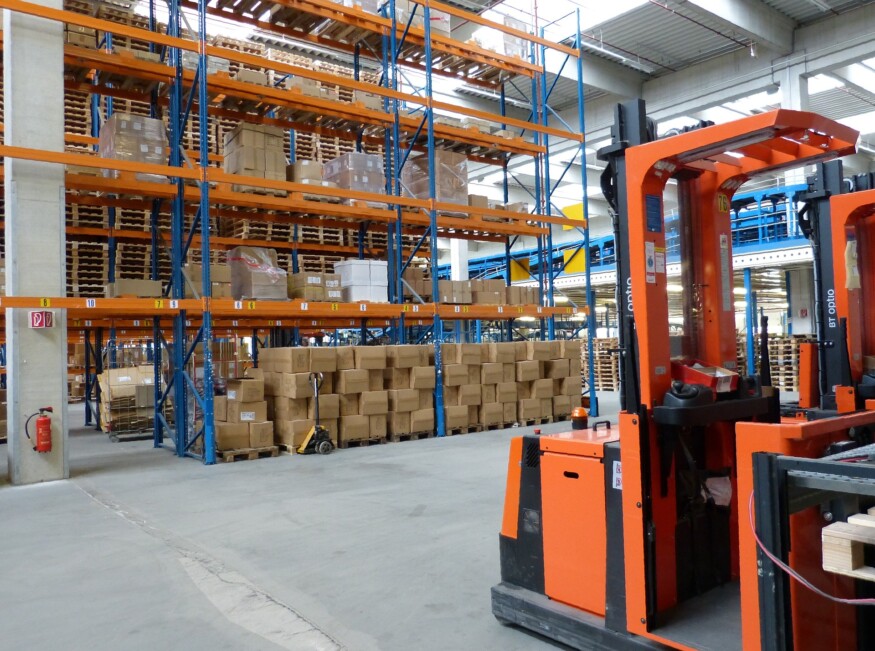
The Annual Tax Act 2024 (Jahressteuergesetz 2024), enacted on 2 December 2024, abolished the VAT warehouse scheme (Section 4 No. 4a of the German VAT Act, UStG) with effect from 1 January 2026, without replacement. The scheme, which had been modelled on the customs warehouse concept since its introduction in 2004, allowed certain businesses to store, trade, and supply goods free of VAT for as long as the goods remained physically within the warehouse. VAT only arose at the point of removal from the warehouse.
What Was the VAT Warehouse Scheme?
Businesses that had been granted approval to operate a VAT warehouse by the tax authorities could store and trade certain raw materials and goods listed in Annex 1 to Section 4 No. 4a UStG without incurring VAT. The deferral of VAT was particularly beneficial for goods not yet intended for final consumption in Germany, which could change hands multiple times without triggering a VAT liability. In practice, however, uptake of the scheme was extremely limited: at the time of abolition, only three approved VAT warehouses existed across the whole of Germany.
Reasons for the Abolition
The disproportionate administrative burden – for both the tax authorities and businesses – relative to the scheme’s limited economic significance made it a prime candidate for simplification. Article 26 of the Annual Tax Act 2024 repealed Section 4 No. 4a UStG along with Annex 1 and all related cross-references in Sections 5, 10, 13, 13a, 15, 18e, and 22 UStG, with effect from 1 January 2026. Since that date, VAT arises at the point of storage, meaning the previous deferral mechanism is no longer available for new inbound goods.
Transitional Arrangement: The Ministry of Finance Provides Clarity for Existing Stock
An initially open question concerned goods that were already held in an approved VAT warehouse on the cut-off date of 1 January 2026. Without a special provision, these existing stocks risked complex correction procedures or even double taxation. Shortly before year-end, the legislature introduced a transitional provision in the newly inserted Section 27(40a) UStG (Act on the Modernisation and Digitalisation of the Fight against Undeclared Work, 22 December 2025): goods lawfully warehoused by 31 December 2025 continue to be governed by the old rules until removal from the warehouse – but no later than end of 2029. The Federal Ministry of Finance published detailed guidance on this in its letter dated 29 December 2025.
Practical Recommendations for Affected Businesses
While the number of directly affected businesses is small, companies active in commodity-intensive or trading-focused sectors should review their warehouse and supply chain structures. In practical terms, the following steps are recommended: (1) assess whether existing stock is held in a former VAT warehouse and how the transitional arrangement to 2029 applies; (2) adjust liquidity planning, as VAT on new inbound goods now arises earlier; (3) consider alternative structures – such as customs warehouses under the Union Customs Code, which may still offer a VAT deferral for non-EU goods; and (4) ensure that ongoing record-keeping obligations for existing stock are met in full.
Conclusion
The abolition of the VAT warehouse scheme sends a clear signal in favour of simplifying German VAT law. For the businesses affected, the end of this arrangement primarily means a shift in the point at which VAT arises, with direct liquidity implications. Those who act early, understand the transitional provisions, and explore alternative structures can, however, significantly mitigate the impact.